Portable Operations: A full-blown 'Q-Party'
Under a brilliant sun on Saturday, March 21, ‘26, I seized the chance to escape into the wild for some afternoon portable operations.
Setup and Conditions
The Weather:
The weather on Saturday initially mirrored my optimism with clear sunshine 😎 and a high of 13°C. Winds remained light from the east at 11 km/h. However, in a fitting tribute to the radio conditions, the sun checked out at 14:00, and by 15:00, the sky had turned a flat, uninspiring grey—perfectly matching the mood of the dead bands for the remainder of my activity.
My Station:
- ICOM IC7300 running 75 watts.
- Vertical Whip Comrod APX Series.
- VARTA 12V 61Ah battery.
- HST III Single lever.
- Pen & Paper Log.
Propagation:
I observed significant disturbances in the magnetic field, particularly on Saturday. 😢
A solar storm phase began late in the week, disrupting wave propagation as three Coronal Mass Ejections (CMEs) arrived. This triggered a geomagnetic storm that reached G3 levels (K_p 7) early Saturday morning. The fact that Friday marked the equinox exacerbated the situation due to the Russell-McPherron effect. Because the Earth’s axis is tilted at approximately 23.5°, the geometric configuration during equinoxes causes even a neutral solar magnetic field to appear as if it has a strong southward component from Earth’s perspective. Magnetic reconnection then creates “cracks” in the magnetosphere, allowing more energy to enter than usual.
In an inspired stroke of timing, I had obviously chosen the absolute “ideal” moment to head out for some low-power portable operation. There is truly no better way to test a weak signal than by hurling it against a G3-level storm and an ionosphere that the Earth’s tilt had already helpfully pre-damaged for me…
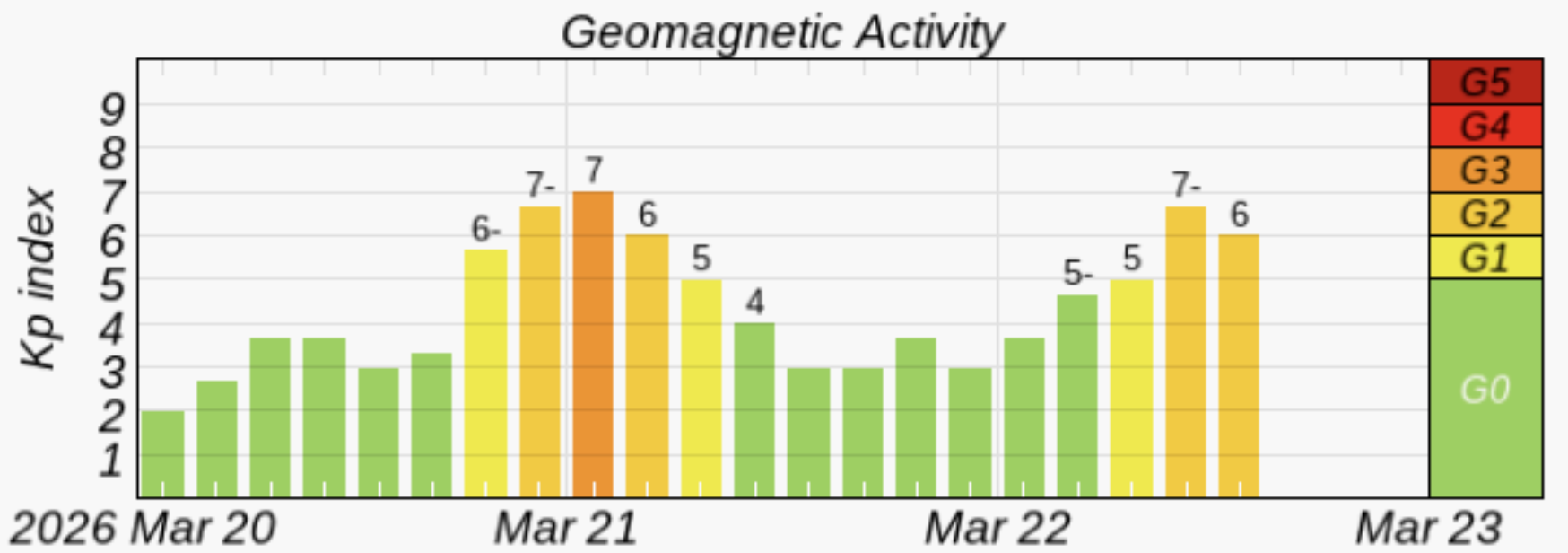
Above: The geomagnetic activity this weekend.
After finding a lonely spot, I set up the station and prepared to kick off operations. Unfortunately, I realized I’d left my earphones at home, forcing me to run the rig on the external loudspeaker. Apparently, the rhythmic chirping of my CW (or perhaps the silhouette of my antenna) acted as a siren song for the local livestock.
Before long, I was surrounded by a curious audience of bovines wandering over from the other side of the hill. As they crowded around to critique my fist, it finally clicked why we hams rely so heavily on “Q-groups” (in German, the pronunciation of “Q” is exactly the same as Kuh (cow)).
It turns out my weekend wasn’t just about radio propagation; it was a full-blown “Q-party” in the most literal sense.
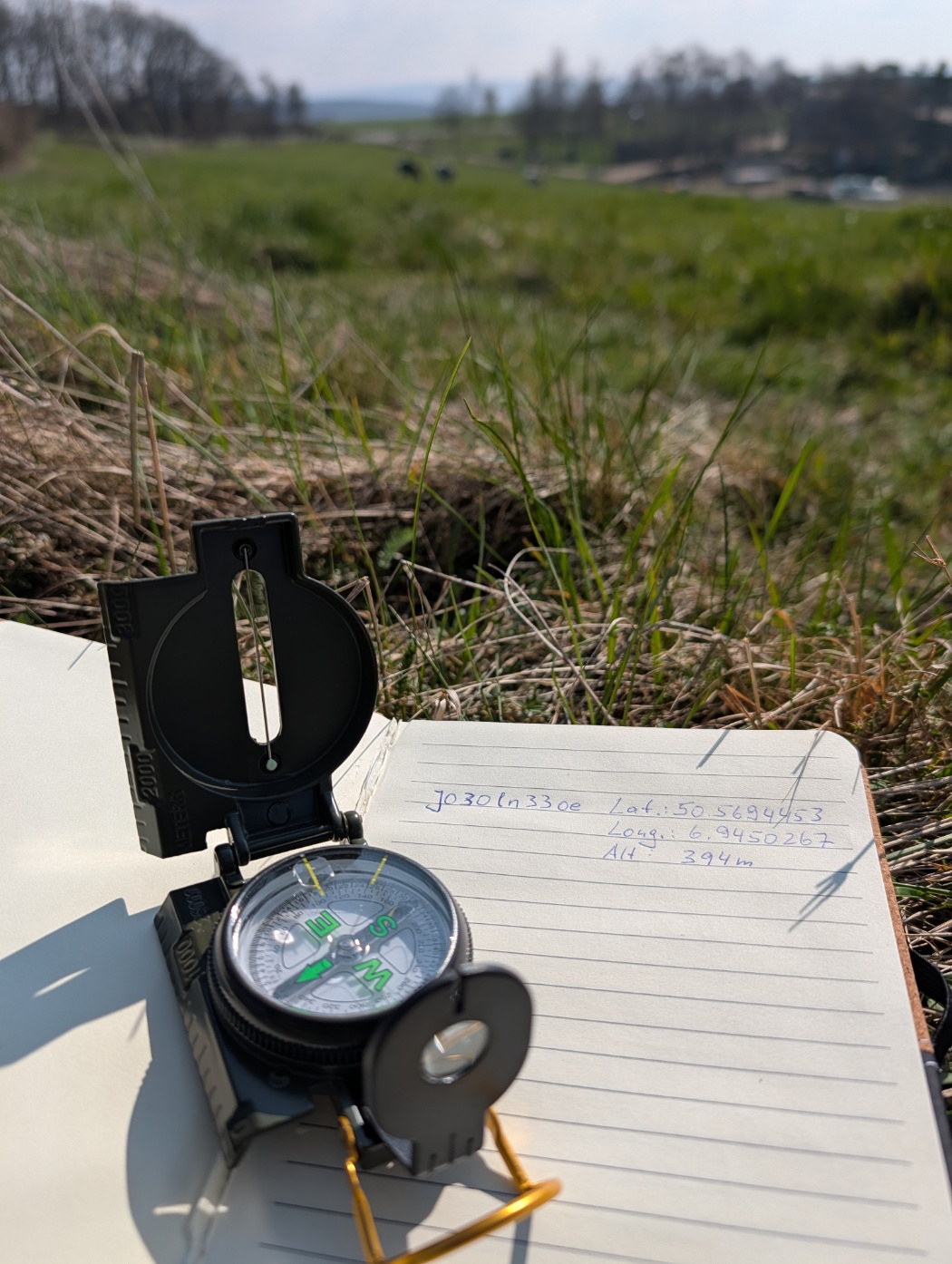
Finding an empty spot.
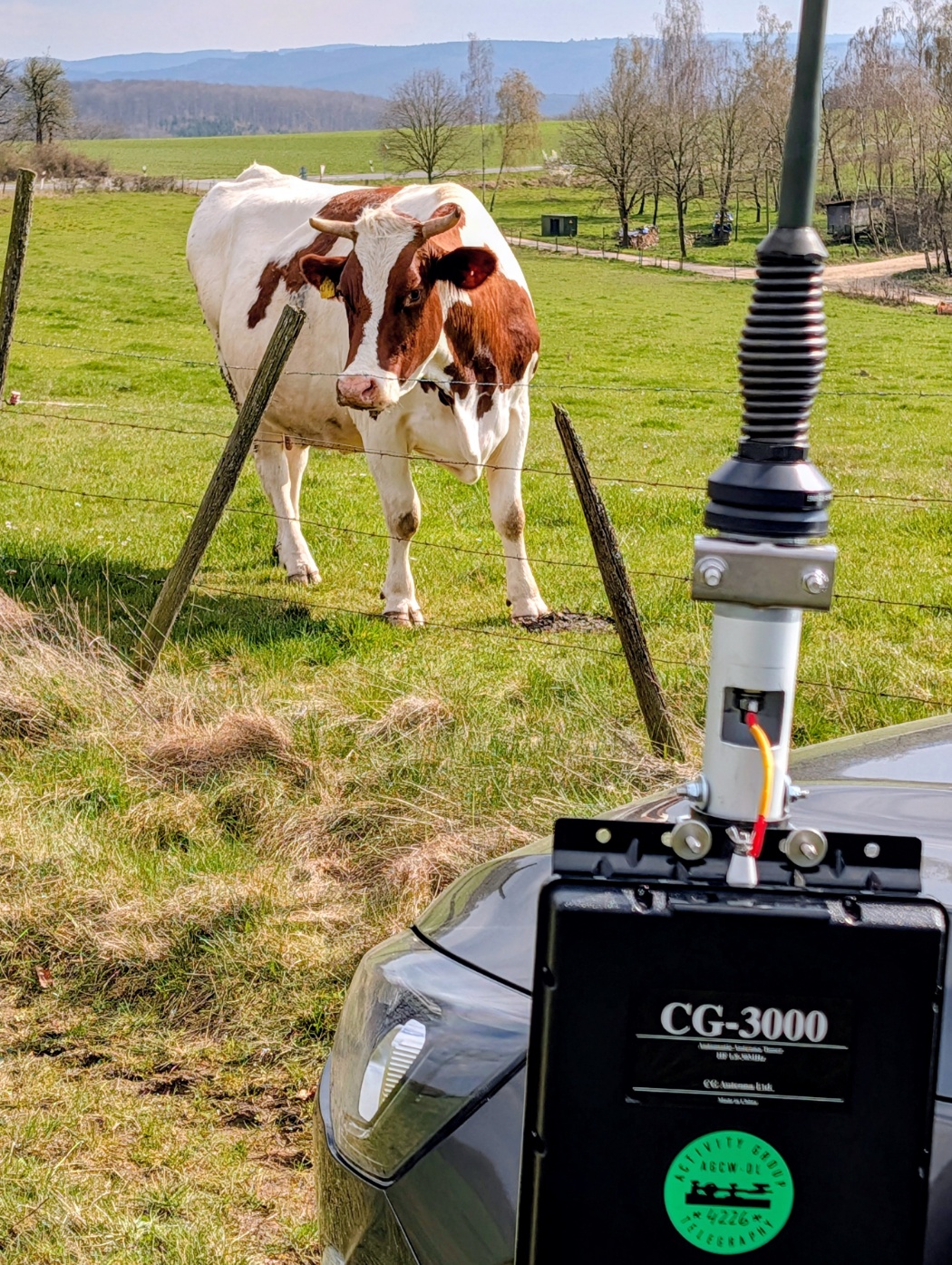
C-Kuhhh Portable.
Despite the bands being a mess the afternoon wasn’t without its victories. Against all odds, I eventually managed to pull through and log some nice contacts. There is a certain kind of satisfaction that only comes from successfully bridging the distance when the conditions are this erratic; it turned what could have been a frustrating afternoon into several hard-won, high-quality exchanges that made the whole outing worthwhile.
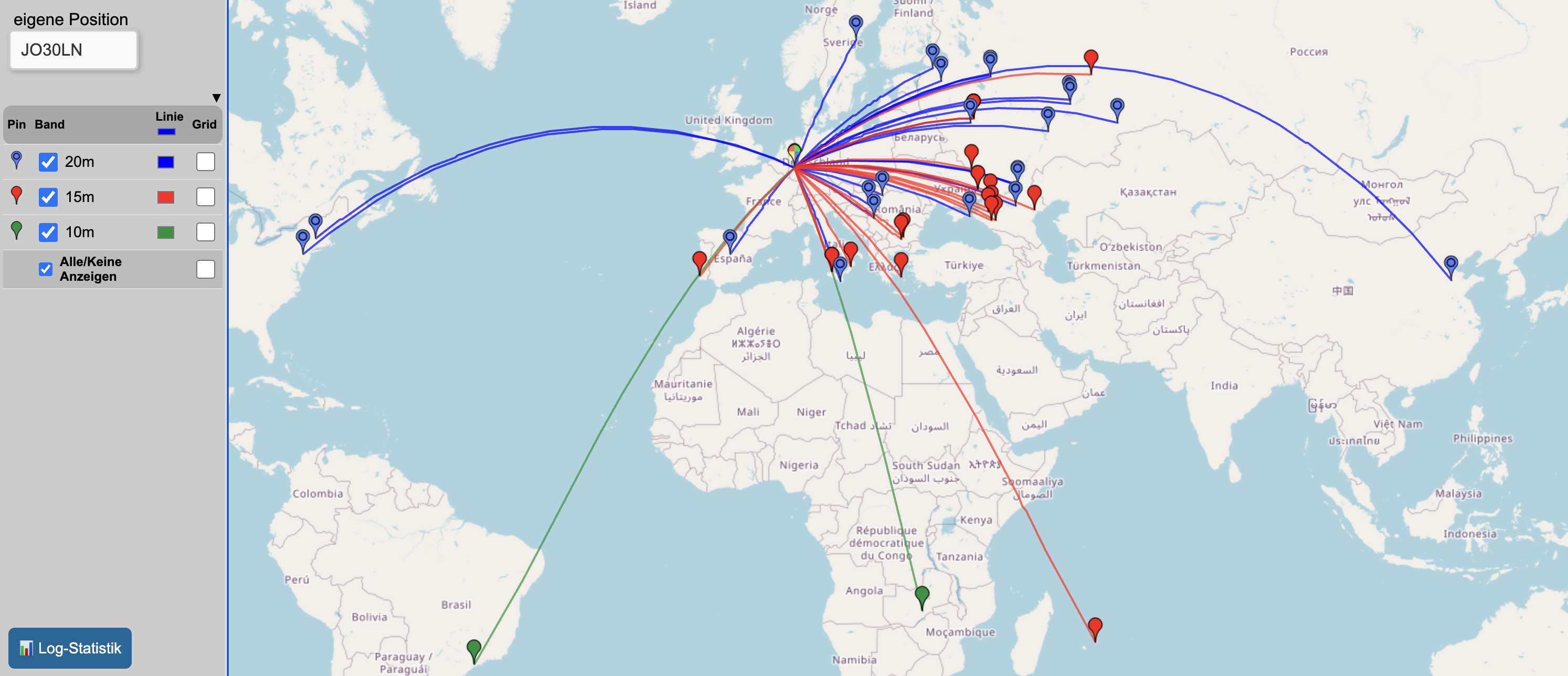
Above: My QSOs on the map.
Lessons Learned (or: A Note to My Future Self)
If there is one definitive takeaway from this weekend’s “Q-party”, it’s this: Never underestimate the power of a pair of earphones.
While the local cows clearly appreciated the open-air CW concert, trying to pull a DX signal out of a G3-level geomagnetic storm using only the rig’s internal speaker is a level of “hard mode” I didn’t actually sign up for. Between the atmospheric crashing and the rhythmic chewing of my bovine audience, I’ve learned that earphones aren’t just an accessory—they are the only thing standing between a successful DX contact and a very confused herd of cattle.
Next time, they’ll be the first thing in the bag.