vBand: Virtual CW, Plug & Play
My motivation
Does CW count without an antenna? Considering telegraphy’s roots lie in wired communication, treating the Internet as a global digital patch cord seems entirely appropriate. When business travel makes throwing a wire out the window impossible, the goal becomes simple: keep the key moving. This setup is my solution to that problem—bringing CW capability to environments where it normally wouldn’t exist.
The Setup
For this setup, I trade the analog audio path for a purely digital approach using the vBand platform by Ham Radio Solutions. Instead of feeding an audio tone into a microphone jack, I use a dedicated USB interface that connects my key directly to the computer. This small dongle acts as a keyboard emulator, translating my keying into commands that the browser interprets as dits and dahs.
Since the signal generation happens entirely within the browser, there is no need for a LC-filter like the one I use for iCW. The waveform is generated digitally, ensuring a perfectly clean signal without any hum or bandwidth issues.
However, there is a catch. Because the sidetone is generated by the browser software rather than a local hardware oscillator, there is a slight latency between physically closing the key and actually hearing the sound. Depending on system performance and internet traffic, this delay can be too long for comfortable QRQ operations, throwing off your timing. The workaround is to use a local external keyer (like the Morserino) to provide immediate audio feedback—though, of course, that adds another piece of gear to the travel bag.
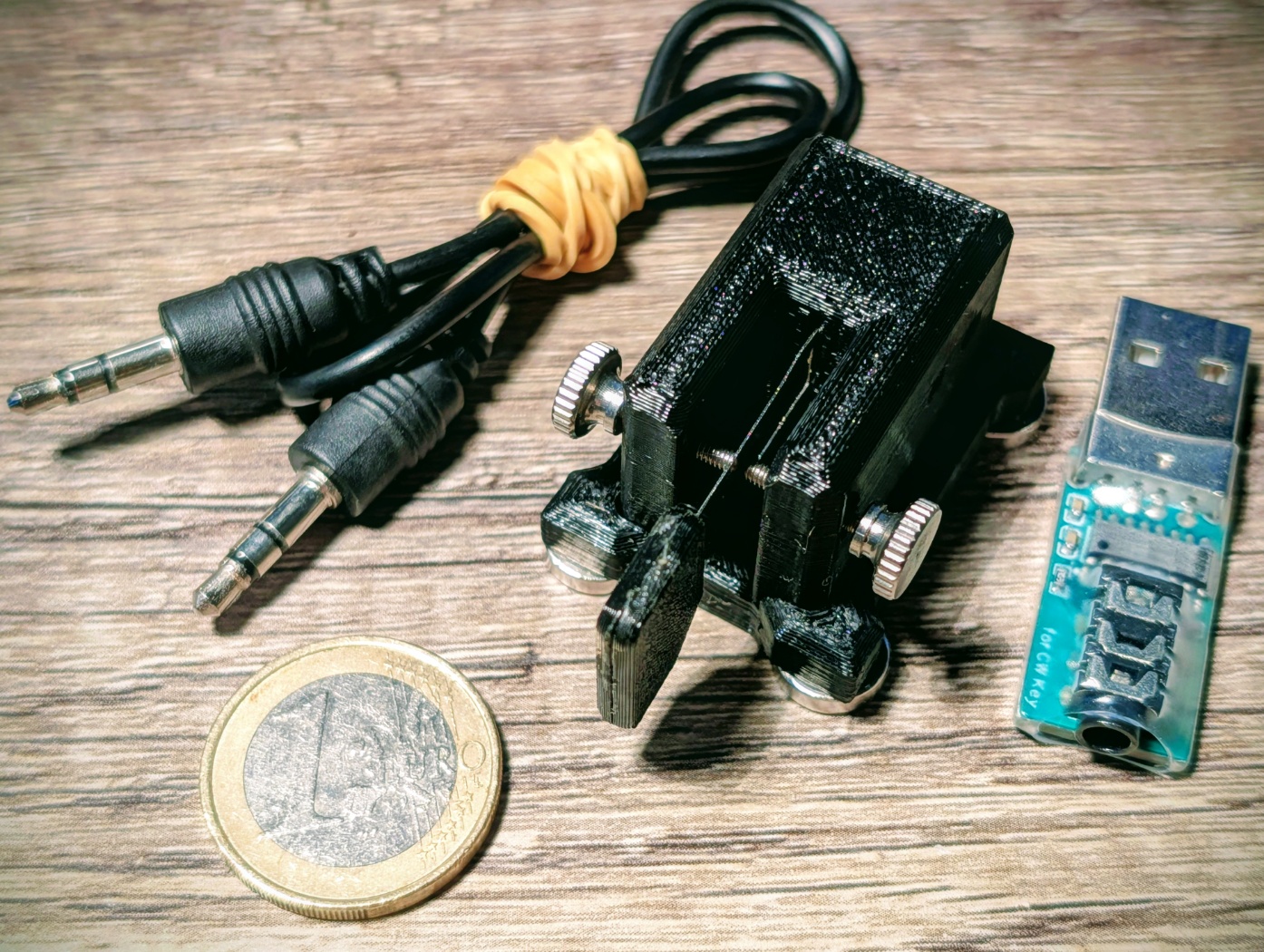
Above: The vBand interface and paddle (1 Euro coin for scale).
My Testimonial
The beauty of vBand lies in its simplicity. Because it runs entirely in a web browser (Chrome works best for me), there is absolutely zero software to install—no Mumble client, no VOX configuration, and no audio level tweaking. I just plug in the USB adapter, open the URL, adjust key and sidetone and I’m QRV.
For travel, this is even more streamlined than my iCW setup. While the latency issue prevents me from reaching top speeds without external hardware, the “channels” system makes it easy to find someone to talk to or just practice with the built-in QSO bot. It lacks the “radio” feel of turning a VFO, but for business trips, especially in hotels where opening a window to throw out a wire is impossible, it is a perfect solution. At the end of the day, if I have internet, I have CW.
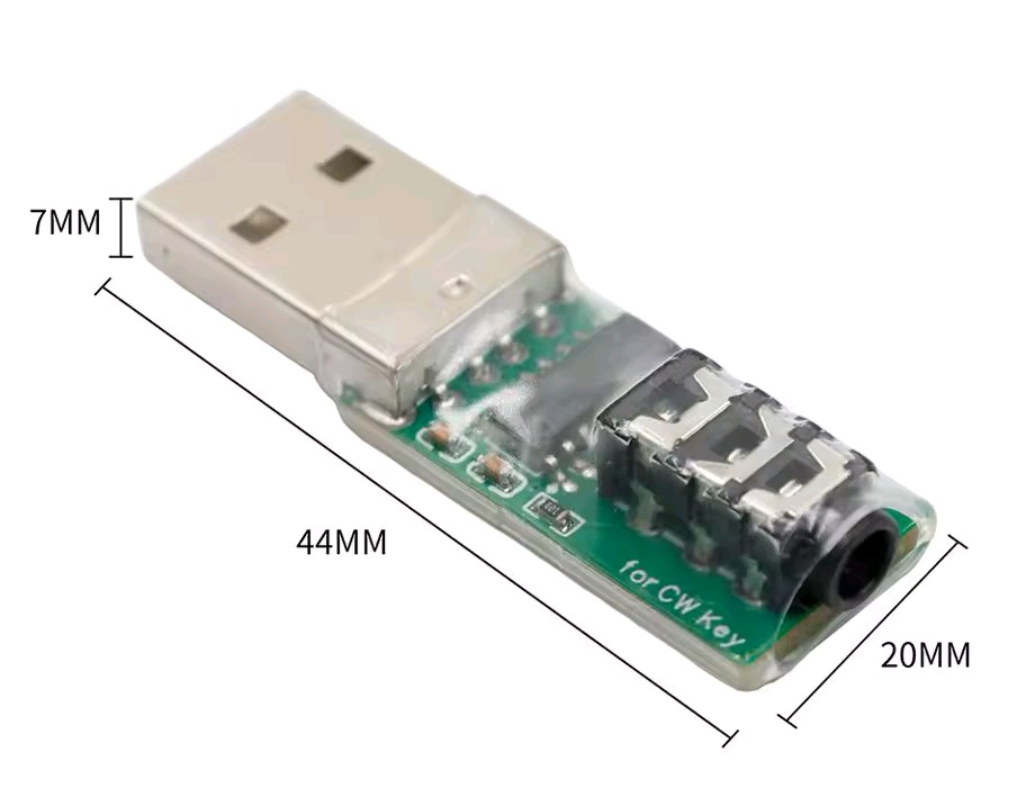
Above: The vBand interface.